Are you wondering which properties actually allow short-term or monthly guests? The best properties for rental strategies are those where unit-level eligibility, Homeowners Association policies, and city regulations clearly align with your goals.
Only a limited number of Seattle condo buildings are commonly associated with short-term rental opportunities, making building selection extremely important. A property appearing on a friendly list is only a starting point, not proof that a specific unit can legally operate. While online discussions frequently point to specific downtown and Belltown addresses, buyers must distinguish between building reputation and actual legal authorization.
This guide reviews four frequently discussed options from both short-term and mid-term perspectives, outlining the exact documents, caps, and permits you must verify before making an offer.
What to Look for in Seattle Condo Buildings for Short- and Mid-Term Rentals
Before evaluating individual properties for purchase, you need a clear screening process. Short-term and mid-term rentals serve different visitor types, carry separate legal classifications, and face distinct Homeowners Association restrictions.
For short-term rentals
When reviewing Seattle condos for short-term rental, you might want to look for properties suited for regular turnovers. Consider these factors:
- Building rules: Check the Homeowners Association policies for any rental caps or bans.
- Minimum-stay requirements: Confirm if the building forces a minimum number of nights per guest.
- Guest policies: Review how the building handles guest access and check-ins.
- Registration requirements: Look up any required building registrations or check-in rules.
- Building fees: Check for move-in, move-out, or short-term hosting fees.
- Parking: See if the unit includes a parking space, which can be a strong draw for travelers with vehicles.
- Amenities: Evaluate features like pools or fitness centers that may appeal to prospective guests.
- Location demand: Check the distance to key attractions and whether the property sits in one of the best neighborhoods for Airbnb in Seattle.
- Unit layout: Make sure the space works well for frequent guest turnovers.
For mid-term rentals
When looking at Seattle condos for mid-term rental, the needs shift toward longer stays. Consider these factors:
- Furnished-unit requirements: Confirm if the Homeowners Association allows furnished rentals.
- Lease flexibility: Check if you can rent the unit for one to six months.
- Rental restrictions: Review the building rules for any lease limits.
- Minimum lease terms: Verify the exact minimum days allowed, usually 30 days or more.
- Utilities: Determine if utilities are easy to include in the monthly rate.
- Workspace: Look for layouts that easily fit a desk for remote workers.
- Parking: Dedicated garage parking can be an attractive advantage for visiting professionals who commute.
- Neighborhood demand: Assess the area for safety and everyday conveniences.
- Access to transit: Check how close the property is to employment centers and public transit.
Best Seattle Condo Buildings for Short-Term Rentals
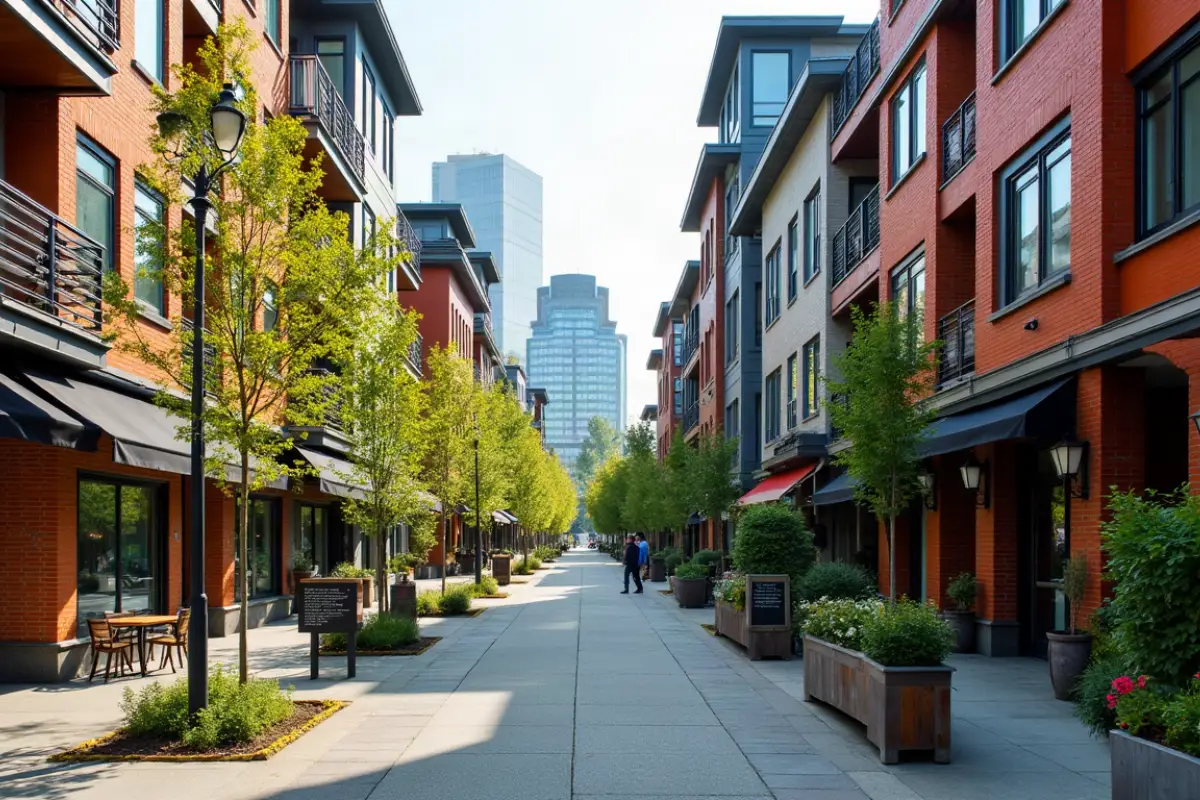
Published lists of rental-friendly properties often conflict, as older real estate articles cite buildings whose associations have since voted to ban transient hosting. This discrepancy is exactly why we frame these properties as Seattle buildings to investigate rather than a permanent list that definitely permits stays.
Below is an evaluation of four frequently cited communities and the specific operational details you must verify for each.
Belltown court
Belltown Court sits right in the heart of Belltown at 2415 2nd Avenue. This property features a central courtyard, an indoor pool, and a sauna. It may appeal to short-term investors because of its walkable location near Pike Place Market and the waterfront. Because the community features smaller studio and one-bedroom layouts, buyers must carefully review the association’s rental declaration and any building caps before making an offer.
Newmark tower
Newmark Tower is a downtown high-rise located at 1415 2nd Avenue. The property offers an indoor pool, a fitness center, and a concierge desk. From a short-term perspective, the location can appeal to vacationers and traveling consultants. For mid-term stays, professionals may appreciate the direct access to downtown retail. The building has historically maintained specific minimum-stay rules, so buyers must confirm current leasing duration requirements directly with the association.
Montreux
Montreux is located at 425 Vine Street in Belltown. This property features rooftop views of the Space Needle and lower Homeowners Association dues compared to many high-rises. The location can be convenient for Space Needle visitors and seasonal cruise passengers. It is commonly identified as a property that may be suitable for both short-term and mid-term strategies, subject to current association rules and fee schedules.
Waterfront landing
Waterfront Landing sits at 1900, 1950, and 2000 Alaskan Way across from the Elliott Bay waterfront piers. It features a gym, a hot tub, and a club room, appealing to leisure travelers and seasonal maritime visitors. Because condo boards periodically update their rules on building security and common area usage, buyers must review the association’s latest policies before purchasing.
To help you compare, here is a quick overview of these four properties.
| Building Name | Location | Potential Strategy Focus | What Buyers Must Verify |
| Belltown Court | Belltown | Short-Term and Mid-Term | Current Homeowners Association rental guidelines, caps, and unit eligibility |
| Newmark Tower | Downtown | Short-Term and Mid-Term | Building rules on minimum stays and formal registration limits |
| Montreux | Belltown | Short-Term and Mid-Term | Current rental restrictions, check requirements, and fee structures |
| Waterfront Landing | Waterfront | Short-Term and Mid-Term | Current Homeowners Association restrictions, rental caps, and stay rules |
Which Seattle Condo Buildings May Work for Mid-Term Rentals?
Do not assume that a property permitting short-term stays is automatically the best choice for a mid-term rental. A mid-term stay lasts 30 days or more and targets relocating professionals or temporary workers.
A suitable mid-term property should offer flexible rental policies that accommodate 30- to 90-day residential leases without triggering tenant-turnover penalties. Look for these specific features:
- Furnished layouts: Dedicated laptop workstations, high-speed internet capability, and in-unit washers and dryers.
- Building amenities: Secure parking and delivery lockers, which can be useful benefits for traveling professionals.
- Location benefits: Convenient transit connections to major work centers like South Lake Union and First Hill, which may strengthen guest interest.
- Functional floor plans: Separate living and sleeping areas with sufficient closet and storage space for multi-month stays.
Seattle Short-Term Rental Rules Condo Buyers Need to Check

City approval does not override condo restrictions. The Homeowners Association rules can be much more restrictive than city laws, and these requirements can change over time. Unit-specific eligibility matters greatly, so investors must verify current requirements before purchasing any property.
The City currently requires short-term operators to hold a business license tax certificate and an STR regulatory license. The regulatory license costs $75 per unit and must be renewed annually. The Seattle Department of Construction & Inspections also notes that properties must meet specific land-use codes.
Additionally, applicable non-primary-residence units must be registered under RRIO Seattle per the city’s official Rental Registration and Inspection Ordinance guidelines. At the state level, operators should also check the Washington State Department of Revenue for applicable lodging tax rules.
You can learn more about local city guidelines in our resource on short term rental regulations in Seattle.
How to Verify a Condo Before Buying It for Rental Use
You need a solid due-diligence process to confirm a property is legally allowed to operate. Following these steps helps protect your Seattle condo investment.
Step 1: Request the governing documents
Always review the declaration and bylaws. Check the rules, regulations, amendments, and any specific rental policies.
Step 2: Confirm rental restrictions
Look closely for rental caps and minimum lease terms. Check for short-term restrictions, guest rules, registration requirements, and extra fees.
Step 3: Confirm current building practice
Ask the Homeowners Association board whether the building currently permits your intended rental strategy. Rules on paper might differ from daily enforcement.
Step 4: Confirm Seattle requirements
Check the current City requirements for the specific unit you want to buy. Do not assume the rules apply equally to every unit.
Step 5: Confirm unit-level eligibility
Do not rely solely on the building’s reputation. Verify that the exact unit you plan to buy is legally eligible for your intended use.
Step 6: Model the property
Only evaluate the numbers after confirming legal eligibility. Review the purchase price, Homeowners Association dues, property taxes, and insurance. Factor in utilities, cleaning fees, and management costs. Estimate your maintenance coordination and expected revenue before looking at financing options.
Short-Term vs. Mid-Term Rentals in Seattle Condos
Understanding the difference between these two strategies is essential. You can review a deeper breakdown of short-term vs mid-term rentals in Seattle to see which fits your goals.
| Factor | Short-Term Rental | Mid-Term Rental |
| Typical stay | Short stays | Longer temporary stays |
| Guest profile | Travelers and visitors | Relocating professionals, temporary workers, etc. |
| Turnover | Higher | Lower |
| Furnishing | Important | Usually essential |
| Cleaning frequency | Higher | Lower |
| Building restrictions | Often more restrictive | May be different |
| Pricing approach | Nightly or short-stay | Monthly or longer-stay |
Are Seattle Condo Buildings a Good Investment for Short- or Mid-Term Rentals?
Evaluating Seattle condo buildings is only one part of the investment decision. A building that permits a particular rental strategy may provide an opportunity, but profitability depends on the unit’s acquisition cost, operating expenses, demand, rental strategy, and applicable restrictions.
Monthly Homeowners Association dues and special assessments can substantially affect net cash flow, particularly in full-amenity downtown towers. In addition, conventional mortgage programs often apply stricter underwriting standards or higher interest rates to condo developments with high investor concentration or non-standard leasing policies.
Beyond financing and property taxes, your financial model must account for platform booking commissions, commercial liability insurance policies, utility carrying costs, initial furnishing packages, and seasonal occupancy dips during the Pacific Northwest winter.
Common Mistakes When Buying a Seattle Condo for Rental Use
Avoid these frequent errors when searching for Seattle condos that allow Airbnb or similar platforms:
- Relying on old articles: Trusting archived internet guides without confirming whether the association has passed rental bans in recent years.
- Ignoring documents: Skimming over bylaws, meeting minutes, and financial reserve studies that detail pending rental rule changes or litigation.
- Assuming profit: Overlooking how high monthly dues and seasonal occupancy shifts might reduce operating margins in an otherwise eligible unit.
- Forcing a strategy: Assuming an association permits 30-day corporate stays when its bylaws actually require standard 6-month or 12-month residential leases.
- Ignoring special assessments: Failing to review reserve studies for major upcoming building capital repairs that can require large lump-sum owner contributions.
- Skipping steps: Evaluating revenue before confirming legal eligibility.
Seattle Condo Rental Due-Diligence Checklist
Use this checklist to gather the right documents and data when evaluating famous buildings in Seattle or any new property:
- HOA documents: Current Homeowners Association declaration and bylaws.
- Meeting minutes: Latest board meeting minutes and notes.
- Reserve study: Association reserve study for upcoming repairs.
- Rental limits: Building rental cap and waitlist status.
- Minimum stays: Official minimum-stay rules for guests.
- Unit check: Unit-level eligibility confirmation.
- City licensing: Seattle business license tax certificate requirements.
- STR license: Short-term regulatory license requirements.
- Registration check: RRIO registration requirements where applicable.
- Insurance requirements: Check for insurance requirements or restrictions, and verify any building-specific coverage rules directly with the Homeowners Association and appropriate insurance professionals.
- Cost review: Monthly Homeowners Association dues schedule.
- Service estimates: Estimated turnover, utility, and cleaning fees.
- Operating model: Estimated management, cleaning, and administrative costs for your cash-flow projection.
Choosing the Right Seattle Condo Building for Your Strategy

The best property for a short- or mid-term rental is not necessarily the building with the most amenities or the strongest rental reputation. It is the property whose building rules, city requirements, unit characteristics, operating costs, and rental strategy align with your goals. Always verify current building and regulatory rules before purchasing.
If you decide to seek professional operational support, Guestable provides property management in Seattle for owners looking for reliable property management services. Whether you choose short-term rental management or mid-term rental management, our team handles day-to-day operations like listing distribution, guest communications, turnover cleanings, and maintenance coordination to support your rental strategy.