Before purchasing or listing a home, property owners must approach an Oakville short term rental investment as an operating business rather than a passive income source. Success takes careful planning and clear numbers.
You need to understand local rules, actual costs, and what drives guest demand. Investors must look closely at potential earnings vs. true operating costs. This helps you see if a short-term, mid-term, or long-term lease strategy gives the best return. It also helps you decide if short-term rental management options fit your schedule.
Let’s review everything you need to know to help you evaluate your property and make a smart choice.
Is Short Term Rental a Good Investment in Oakville?
A short-term rental is not always profitable right away. True success comes down to a basic real estate formula.
Here is how to look at the numbers:
Gross Revenue – Operating Expenses = Net Operating Income (NOI)
Operating income shows your cash flow before capital costs. Your final profit depends on your mortgage rates, taxes, and startup costs.
2026 market data from AirDNA shows that active short-term rentals across Oakville bring in an average trailing annual revenue of roughly $26,500. This number blends different property types from single rooms to big houses. Your own numbers will depend on your specific property, pricing, and operational setup.
What determines short term rental investment profitability in Oakville?
A property’s bottom line changes based on costs, space, and how you run it. Two homes on the same street can see very different results.
Investors need to look at these core details:
- Purchase price and financing: High prices and steep interest rates lower your cash flow.
- Property type: Your home layout impacts what guests you attract.
- Location: Being close to transit or the waterfront boosts guest interest.
- Amenities: Private parking and in-suite laundry help you charge premium rates.
- Running overhead: You have to pay for utilities and internet even when the home is empty.
- Seasonality: Summer brings peak demand. Winter requires tighter budget control.
Gross revenue vs. actual profit
Gross revenue is the total money collected from guests. Actual profit is what is left after paying all your bills.
Tracking top-line revenue without subtracting real overhead gives a false picture. A property is only a good investment if its net income easily covers the debt and delivers a fair return.
Why Consider Short-Term Rental Investment In Oakville?
Oakville sits in a great spot within the Greater Toronto Area. This location brings in different types of travelers all year.
Several local factors bring guests to the area:
- Regional access: Oakville is on the Queen Elizabeth Way and GO Transit lines.
- Business activity: The local commercial area brings in corporate workers needing furnished housing.
- Healthcare needs: The local hospital brings in visiting medical staff and patients.
- Local events: Summer festivals and sports tournaments boost seasonal visits.
- Temporary housing: Families doing home repairs often book multi-week stays.
These factors do not guarantee bookings. Performance depends on your specific layout and pricing.
What Types Of Properties Could Work For Short-Term Rentals In Oakville?
You must check if a home can legally operate as a rental before looking at its style. The layout only matters if local rules allow short stays.
Look into these housing types once you confirm you can legally operate:
Condos and apartments
These units offer easy access to transit and dining. They appeal to solo business travelers and couples. Some condo boards may ban short stays. Building rules always override municipal approvals.
Townhomes
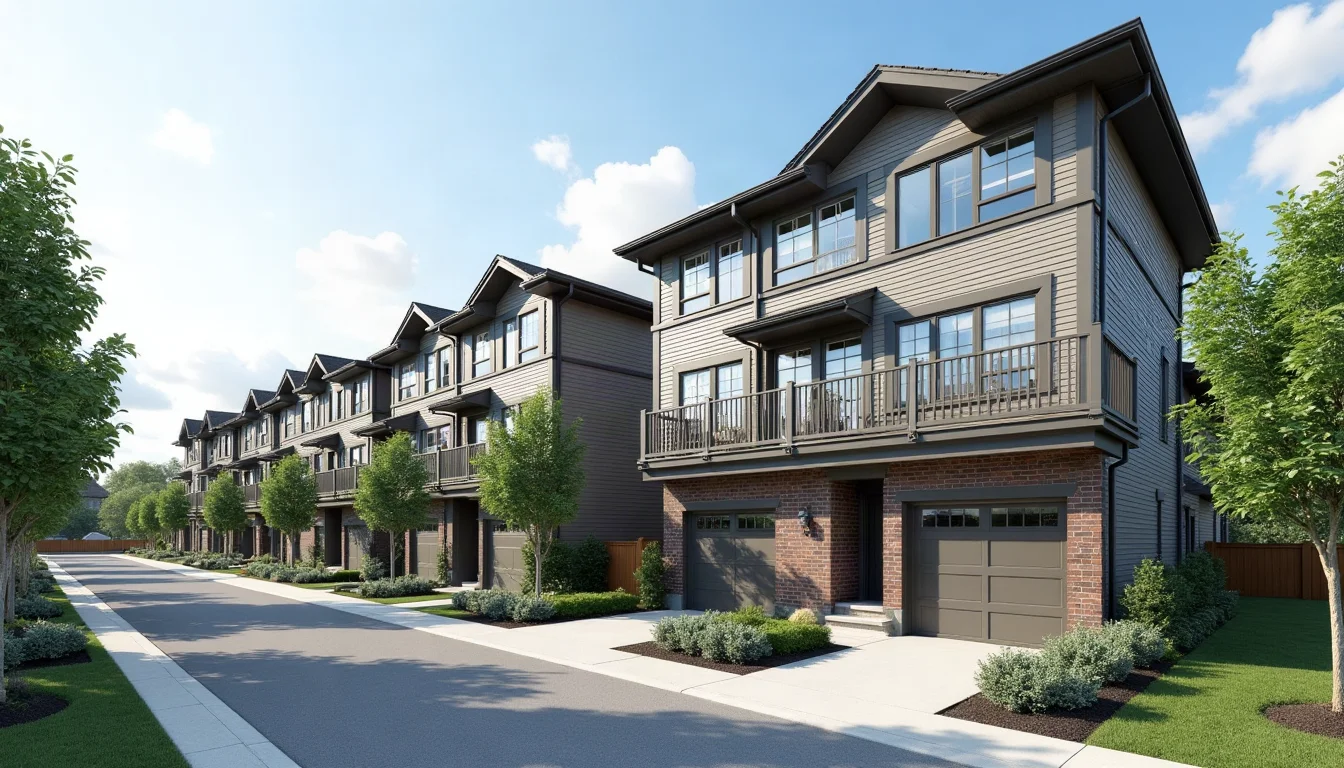
Townhomes work well for small families and business teams. They offer multiple bedrooms and full kitchens. Hosts must manage noise levels closely to avoid complaints since you share walls with neighbors.
Detached homes
Single-family houses fit larger groups and family visits perfectly. They offer much more privacy and space. These homes carry higher operating overhead. Owners have to pay for private snow removal and higher heating bills.
Are Short-Term Rentals Legal In Oakville?
Short-term rentals are legal in Oakville under strict municipal rules. Owners must meet specific legal standards before accepting guests.
Town rules require an active municipal licence for any stay of 28 consecutive days or less. The host must be the principal resident of the home. You cannot legally run short stays out of a secondary investment property. Review the official short-term rental regulations in Oakville on the Town website.
Getting a licence requires zoning approval, safety inspections, liability insurance, and background checks. Make sure to verify current rules since municipal frameworks change over time.
What Should Oakville Property Owners Check?
Running a rental legally requires meeting mandatory standards first. You must separate local laws from optional best practices.
Here are the strict legal and licensing requirements:
- Annual Licence: Operators must hold an active licence and pay the annual fee.
- Tax Collection: You must collect and remit the 4% Municipal Accommodation Tax.
- Documentation: You need zoning approval, safety inspections, floor plans, and a background check.
- Local Contact: You must designate a local contact available to attend the property quickly.
- Licence Display: The valid licence number must be on all marketing profiles.
Here are recommended operating practices:
- Provide the official Renter Code of Conduct to guests before check-in.
- Install noise monitoring sensors to protect neighborhood peace.
- Keep a digital guest log for at least one year.
What are the Main Costs Of Running a Short-Term Rental in Oakville?
Running a rental involves regular property holding expenses and hospitality costs. Investors need to understand how these line items change over the year.
Expenses fall into fixed costs and variable costs. You must organize your budget across three primary categories:
- Property costs: Mortgage payments, property taxes, condo fees, and commercial insurance.
- Operating costs: Utilities, turnover cleaning, guest supplies, maintenance coordination, and seasonal groundskeeping.
- Rental management costs: Booking platform fees, vacation rental manager fees, and marketing expenses.
Knowing these baseline costs ensures you do not overestimate your returns during slower winter months.
How To Estimate Short Term Rental Investment Profitability In Oakville
Building a reliable financial plan prevents costly mistakes before you buy. You need to look past maximum booking numbers to see the real picture.
Build your projection using these exact steps:
- Estimate realistic rates: Look at comparable properties for both peak summer and slow winter periods.
- Estimate realistic occupancy: Factor in calendar gaps and seasonal slowdowns.
- Calculate gross revenue: Multiply your daily rate by your projected booked nights.
- Subtract operating expenses: Deduct utilities, cleaning, maintenance coordination, licensing, and insurance.
- Calculate Net Operating Income: Subtract total operating expenses from gross revenue. Review our detailed guide on how to calculate NOI for more help.
- Account for financing: Subtract your mortgage payments and initial setup costs to find your net cash flow.
Stress-testing with multiple scenarios
You should never rely on a single optimistic projection. Run your numbers across different situations.
Plan for these three clear scenarios:
- Conservative scenario: Model performance assuming slow bookings and discounted rates.
- Moderate scenario: Use local baseline averages to gauge normal daily returns.
- Optimistic scenario: Model high summer demand. Do not use this as your baseline.
How Should You Price A Short Term Rental In Oakville?
Pricing a property takes an active short-term rental pricing strategy. Setting a single fixed rate often leaves revenue on the table.
Dynamic adjustments help you respond to shifting market demand. Make pricing choices based on these factors:
- Seasonality: Adjust rates for high summer waterfront activity and slower winter months.
- Local events: Change prices during festivals or sports tournaments.
- Booking lead time: Track when guests reserve and refine rates as dates get closer.
- Competitor pacing: Monitor nearby listings so your pricing stays realistic.
- Minimum stay rules: Apply two or three-night minimums on weekends to avoid calendar gaps.
What Can Affect Short-Term Rental Demand In Oakville?
Market travel drivers set baseline visitor activity. Performance still depends heavily on property details.
Analyze these factors that determine how attractive a home is to guests:
- Bedrooms and layout: A one-bedroom suite serves solo travelers. Larger homes attract families.
- Dedicated parking: Having accessible driveway spaces is a major booking filter.
- Workspace and connectivity: Fast internet directly influences bookings from remote workers.
- Functional amenities: Essentials like private laundry and air conditioning make properties competitive.
- Guest capacity: Properties must balance guest counts with municipal room size rules.
A stylish townhouse with private parking will capture better corporate demand than a detached house lacking modern updates.
Short-Term Rental Investment Vs. Other Rental Strategies in Oakville

Short-term hosting is only one way to make money from real estate. Choosing the right model depends on municipal rules and your personal time.
For investors with secondary properties, a mid term rental management plan offers a fully compliant path.
Feature | Short-Term Rental (STA) | Mid-Term / Executive Rental | Long-Term Traditional Lease |
Stay Duration | 1 to 28 consecutive nights | 30 to 90 plus consecutive nights | 12 or more consecutive months |
Typical Guest Profile | Weekend visitors, event attendees | Relocating corporate staff, temporary workers | Local residents, stable families |
Regulatory Rules | Primary residence required | Secondary investment homes permitted | Standard Ontario rules apply |
Operational Work | High | Moderate | Low |
Revenue Flow | Variable cash flow with summer peaks | Stable monthly rates | Fixed predictable rent |
Owner Flexibility | High | Medium | Low |
When each strategy makes sense
Every investor has different goals and properties. Here is when to use each model.
- Short-term rentals: Best for primary homeowners who have the time to manage dynamic pricing and cleaning schedules.
- Mid-term rentals: Ideal for real estate investors holding secondary properties that do not qualify for a short-stay licence.
- Long-term rentals: The best choice for investors seeking more predictable cash flow and less day-to-day management.
When Does Professional Short-Term Rental Management Make Sense in Oakville?
Managing a rental takes real operational work every day. Professional oversight makes sense when hospitality tasks cut into your personal time.
Consider vacation rental management services if you face these operational hurdles:
- You live outside Oakville: Physical distance makes direct hosting very difficult.
- You have limited time: Providing great hospitality means responding to guests fast.
- You own multiple properties: Juggling several turnover schedules requires strict systems.
- You need pricing help: Setting rates manually often misses out on extra income.
- You want less day-to-day involvement: Outsourcing operations lets you earn income without handling daily chores.
When these demands exceed your capacity, a short term rental property management team provides structured support.
You want less day-to-day involvement
Partnering with a dedicated team transfers the administrative friction into a smooth workflow. A professional team takes several tasks off your plate.
These daily hosting tasks include:
- Guest communication: Handling guest inquiries and answering questions.
- Booking management: Managing calendar availability and organizing check-in instructions.
- Cleaning coordination: Scheduling professional turnovers and restocking supplies.
- Maintenance coordination: Arranging routine checks and dispatching vetted trades for minor repairs.
- Pricing and revenue: Adjusting rates dynamically across peak seasons.
Ultimately, using Airbnb property management in Oakville can save you valuable time because a short term property management team gives you reliable operations.
What Should Investors Consider Before Buying a Short-Term Rental Property in Oakville?
If you are evaluating what an STR investment is and what it requires, looking strictly at gross revenue alone is a big mistake. A solid STR investment needs thorough underwriting before you buy.
Analyze the asset through these four clear stages:
- Before Buying: Verify municipal eligibility and building rules. Review your true purchase costs and loan payments.
- Before Forecasting: Gauge traveler appeal based on transit and waterfront access. Base projections on realistic local averages.
- Before Operating: Itemize baseline mortgage payments and direct operating costs. Factor in municipal fees and management overhead.
- Before Committing: Run conservative financial scenarios. Establish a clear backup plan in case local rules tighten.
Common Short Term Rental Investment Mistakes To Avoid in Oakville
Many buyers make critical miscalculations during the planning phase. Treat the asset as a business investment first.
Avoid these frequent investment errors:
- Confusing gross revenue with actual profit: High booking numbers do not mean positive cash flow.
- Ignoring fixed and variable costs: Overlooking running overhead drastically hurts financial projections.
- Overestimating calendar occupancy: Properties experience seasonal lulls and natural turnover gaps.
- Ignoring condo restrictions: Purchasing a unit without verifying condo board rules can result in hefty fines.
- Underestimating wear and tear: Frequent guest turnover accelerates wear on furniture and flooring.
- Failing to model an alternative strategy: Relying exclusively on short stays leaves you vulnerable to market shifts.
What Makes a Good Short-Term Rental Investment in Oakville?
True investment quality is defined by legal durability and resilient numbers. A viable property requires much more than an attractive listing.
Evaluate any property against this core checklist:
- Fully eligible to operate: The home complies strictly with town bylaws and condo rules.
- Matches real demand: The layout offers dedicated parking, fast internet, and workspaces.
- Realistic revenue assumptions: Financial projections reflect actual daily rates and occupancy levels.
- Positive bottom line: Cash flow projections remain positive after deducting all expenses.
- Passes stress tests: The property remains financially sustainable under a low occupancy forecast.
- Has a backup strategy: The asset can transition smoothly to a mid term lease if needed.
Ontario Short Term Rental Investment Checklist
Evaluating a property takes a step-by-step process. Use this checklist to review your assets systematically.
- Eligibility: Confirm compliance with local bylaws and verify primary residence status.
- Property: Review official zoning permissions and condo corporation declarations.
- Market: Identify specific local demand drivers and analyze direct competing properties.
- Revenue: Benchmark realistic average daily rates and estimate calendar occupancy.
- Costs: Itemize fixed holding costs and calculate variable operating expenses.
- Financing: Review mortgage terms, interest rates, and upfront capital requirements.
- Rental Strategy: Compare projected net returns across different lease lengths.
- Risk: Run conservative financial projections and establish an exit strategy.
Making An Informed Rental Investment Decision In Oakville

Successful property investing requires looking past top-line nightly rates. A resilient Ontario short term rental investment comes down to underwriting the complete business equation.
Before committing capital, verify that the property complies with local building regulations. Ground your revenue projections in realistic annual occupancy, subtract all carrying overhead, and stress test your numbers. Having a clear backup strategy ensures your short term rental investment opportunities stay protected if travel patterns change.
Once you confirm your property is financially sound, you must decide how much hands-on time you want to dedicate to hospitality logistics.
Teams like Guestable provide a structured operational solution for owners who want reliable operations without the everyday workload. These professionals handle guest communication, booking coordination, professional cleaning turnovers, maintenance coordination, and dynamic pricing adjustments.