Succeeding during the colder months often involves shifting your booking window toward longer mid-term stays while using short-term bookings to fill tactical gaps. If your booking calendar slows down as temperatures drop, you are not alone. When tourist traffic cools, keeping the same summer pricing and booking rules often leads to empty weeks. Learning how to adapt your booking calendar now helps you prepare for shifting demand patterns before the cold weather sets in.
The goal is not necessarily to keep the property booked with the same type of reservation all winter. Instead, use longer stays to create stability in the advanced booking window, while using shorter stays strategically to fill near-term gaps for your Seattle winter rentals. Reviewing your calendar months in advance allows you to target thirty-day stays before deciding whether to open individual weekend dates.
Why Seattle Winter Rentals Require a Different Strategy
Understanding basic seasonality helps you plan for the colder months. You can adjust your approach as Seattle rental seasonality changes visitor habits.
Short-term demand can soften during the winter. As leisure travel cools in January and February, short-term demand softens. You therefore need to think differently about the booking window. Mid-term stays and corporate housing provide another source of demand. Short-term stays still have a role, particularly for filling shorter gaps.
Focus on Seattle Mid Term Rentals During the Winter
Targeting mid-term stays can be particularly relevant during a softer short-term period. Guests may seek a place for:
- Moving to Seattle: Getting settled before signing an annual lease.
- Family proximity: Returning to the area to help relatives during the holidays.
- Home renovations: Needing a place to stay while their primary residence undergoes major repairs.
- Life transitions: Managing personal changes that require a temporary, comfortable base.
There is a strategic difference when you compare short-term vs mid-term rentals in Seattle. A short-term guest may be looking for a few nights. A mid-term guest may need several weeks or one or more months. They may need furnished accommodation while transitioning between homes or completing local projects. That makes furnished month to month rentals in Seattle relevant to an owner trying to reduce winter calendar gaps. Longer bookings can provide greater booking continuity and reduce the number of turnovers compared with a sequence of short stays.
Target Seattle Corporate Housing Demand

This approach builds naturally from your mid-term strategy. A strong corporate ecosystem can contribute to demand for temporary furnished accommodation.
Regional employers often bring in consultants, temporary staff, and new hires who may prefer fully equipped homes while completing their assignments. Corporate travelers may need accommodation for:
- Travel nurses: Medical staff completing temporary assignments.
- Corporate onboarding: New hires completing their initial training periods in the city.
- Project work: Engineering or tech teams completing specific tasks for a set period.
- Unexpected housing needs: Guests requiring temporary housing during major home repairs.
Some corporate travelers may also have housing budgets that allow them to prioritize space, comfort, location, furnishings, privacy, and convenience.
For example, a relocating employee and their partner may prefer a larger furnished home for several months rather than moving directly into a traditional lease. You can target Seattle corporate housing demand by highlighting your property’s workspace and location.
Start the Conversation About Extensions Early
Guests initially booking one month may eventually need more time at your property. You should establish an extension conversation early enough that the guest has time to make a decision.
Possible reasons a guest might extend include:
- Closing delays: Waiting on an escrow closing date or lease start date for their new house.
- Changed timeline: Their corporate relocation timeline shifted unexpectedly.
- Neighborhood evaluation: They want more time to decide which Seattle neighborhood suits them best.
- Work extension: Their employer extended their local assignment.
- Housing delays: Their permanent housing is not ready to move into yet.
Do not wait until the final few days of the stay. Here is an example flow of how to handle Seattle mid term rentals:
- Initial booking: The guest books for 30 days.
- Check-in: The guest settles into Seattle.
- Early-stay conversation: You ask whether their timeline has changed.
- Potential extension: You offer another two to three months if the property remains available.
- Longer stay: The guest avoids having to immediately transition into an annual lease.
The goal is not to pressure the guest into extending, but to give them first choice of dates before you reopen the calendar to outside bookings.
Don’t Accept Short Advanced Bookings Too Early
Accepting a short stay too far in advance is a common calendar management mistake. You should understand the difference between booking windows to protect your availability.
Several months before the stay is the advanced booking window. At this point, you may want to preserve availability for mid-term bookings, corporate stays, and extended furnished rentals. The immediate booking window happens when the stay is approaching, and the calendar still has a vacancy. At this point, a short reservation may be useful for filling the gap.
Suppose January has an open 30-day period. You receive a request several months in advance for January 10 to 12. Accepting it may block the calendar around those dates and make it harder to secure a longer January booking. Instead, you could preserve those dates while targeting January 1 to 31 or another longer furnished stay. If the longer booking does not materialize as the stay approaches, you might choose to become more flexible about shorter reservations.
Short stays can be useful for filling an immediate vacancy, but accepting them months in advance can fragment your calendar and block longer reservations. Good property management in Seattle requires careful scheduling.
Use Seattle Events to Fill Short Gaps
You can use short stays strategically when they fit around longer reservations. Seattle Convention Center events can create periods of concentrated visitor demand.
You can check the Convention Center event information to identify potential demand windows. Suppose a mid-term guest checks out on February 8, and another checks in on February 15. You have a seven-day gap. If a major convention occurs during that period, a short-term booking may be an appropriate way to fill the gap.
When evaluating furnished short term rentals in Seattle, consider:
- Event dates: When the event starts and ends.
- Expected attendance: How many people will arrive in the city.
- Property location: How close your home is to the venue or transit lines.
- Guest demand: How many visitors need lodging.
- Length of the gap: How many open nights you have.
- Cleaning logistics: The cost and timing of turnover.
- Existing booking commitments: Your current calendar schedule.
Properties near the Seattle Convention Center or transit lines can appeal to event attendees, which is why knowing the best neighborhoods for Airbnb in Seattle helps you set the right minimum stay lengths.
Build a Seattle Winter Rental Calendar Strategy
You can put these concepts into practice by adjusting your pricing and minimum night rules over time. Your strategy should become more flexible as the stay date approaches.
Consider setting these minimum-night rules based on the calendar:
- Three to six months ahead: Set a thirty-night minimum to preserve the calendar for potential corporate guests.
- One to three months ahead: Keep minimum-night requirements high to prioritize furnished monthly demand.
- During an existing stay: Temporarily block the immediate following weeks while discussing extensions with your current guest.
- Two to four weeks ahead: Drop minimums to two or three nights to capture short-term guests and fill vacancies.
- Major event windows: Adjust daily rates and minimums specifically to match event-driven demand.
Make the Property Suitable for Seattle’s Winter Furnished Rental Market
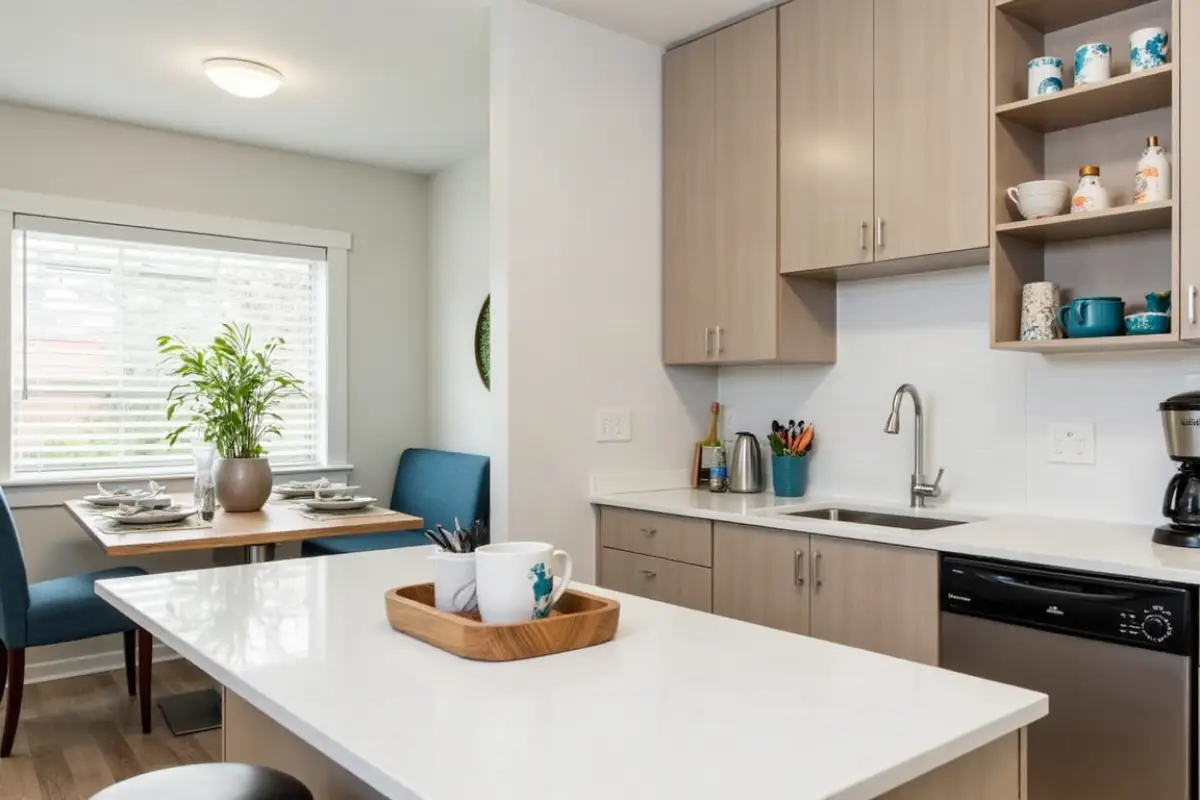
If you are targeting mid-term and corporate guests, your property should be equipped for longer stays. This ensures your home fits the Seattle winter rental market.
You should prioritize functionality for longer stays, rather than simply making the property visually attractive for short-term bookings. Rather than looking at furnished rentals vs. unfurnished rentals in Seattle, this strategy focuses on outfitting your Seattle furnished rental with winter essentials like ergonomic desk chairs, high-speed internet, and reliable heating.
Prioritize these features:
- Comfortable furniture: Seating meant for daily use.
- Reliable Wi-Fi: Fast internet for remote work.
- Dedicated workspace: A desk and supportive chair.
- Fully equipped kitchen: Pots, pans, and cooking tools.
- Laundry access: In-unit or easily accessible machines.
- Quality bedding: Warm sheets and blankets.
- Adequate storage: Dressers and closet space.
- Dining surfaces: Places to eat and work.
- Heating: Effective and reliable temperature control.
- Practical lighting: Bright lamps for dark afternoons.
- Easy check-in: Simple arrival instructions.
- Clear house information: Guides on how appliances work.
How to Evaluate a Winter Booking Before Accepting It
You should use a practical decision framework before approving a reservation. This can help you evaluate your Seattle winter rentals before you decide to accept a reservation.
Before accepting a booking, ask these questions:
- How far away is the stay?
- How many nights does it block?
- Could these dates accommodate a longer booking?
- Is there a major event during the period?
- Is the guest likely to extend?
- How much turnover will the booking create?
- Does the booking fit around existing reservations?
- What is the opportunity cost of accepting it now?
Seattle Winter Rental Strategy Checklist
Keep your approach organized by breaking it down into actionable operational tasks. You can use this checklist to manage your property communications and marketing.
Review these steps for the advanced booking window:
- Prioritize mid-term opportunities across your listings.
- Target corporate and relocation demand by updating your property description.
- Avoid unnecessarily blocking prime calendar periods with very short stays.
- Review upcoming events at the Convention Center.
- Keep longer-stay opportunities open by managing minimum night settings.
Follow these tips during existing stays:
- Monitor guest timeline.
- Ask about potential extension early.
- Make extension options clear.
- Coordinate availability before the guest needs to move.
Use these strategies for near-term vacancies:
- Review upcoming Seattle events for sudden demand spikes.
- Consider short-term bookings to bridge gaps.
- Evaluate gap length against cleaning fees.
- Consider cleaning and turnover costs before accepting short stays.
- Adjust strategy as the stay date approaches.
Seattle Short-Term Rental Regulations Still Apply

Changing from short-term to mid-term or furnished rental use does not mean you should assume a particular regulatory treatment. The city has specific definitions you must follow.
Seattle currently defines a short-term rental as lodging where a home, or part of a home, is rented for a fee for fewer than 30 consecutive nights. The City requires an operator to have a current Seattle business license tax certificate and a short-term rental regulatory license.
An STR that is neither a primary residence nor a portion of that residence must be registered and compliant with the Seattle Rental Registration and Inspection Ordinance (RRIO). Understanding short term rental regulations in Seattle can help you make informed operational choices.
The applicable rules depend on:
- Stay length
- Property type
- Primary or non-primary residence status
- Current Seattle requirements
- Building and HOA rules
- Applicable licensing requirements
Stays of 30 days or longer are not subject to short-term rental regulation.
How Guestable Can Help With Seasonal Rental Management
Professional management can help owners adapt operations as travel patterns change. Working with an experienced team makes it easier to update calendar rules, respond to guest inquiries, and organize guest turnovers when shifting between booking lengths.
Guestable provides practical property management services to handle daily operations such as:
- Rental strategy
- Pricing
- Guest communication
- Calendar management
- Cleaning coordination
- Maintenance coordination
- Short-term and mid-term operations
Working with experts can help you balance short-term rental management and mid-term rental management effectively.